The short verdict
If your problem is one cold room — a bathroom, a home office, a converted attic — the LG Breeze solves it faster and cheaper than turning the central heating back on. If you want to heat an entire 120 m² house with a single unit, it will disappoint you. That is the whole review in three sentences; the rest is detail.
- Warms 15–25 m² rooms fast
- Mounts high, frees the floor
- Thermostat holds 15–35 °C
- Tip-over and overheat cut-off
- Remote + 12-hour timer
- Not a whole-house replacement
What exactly is the LG Breeze™?
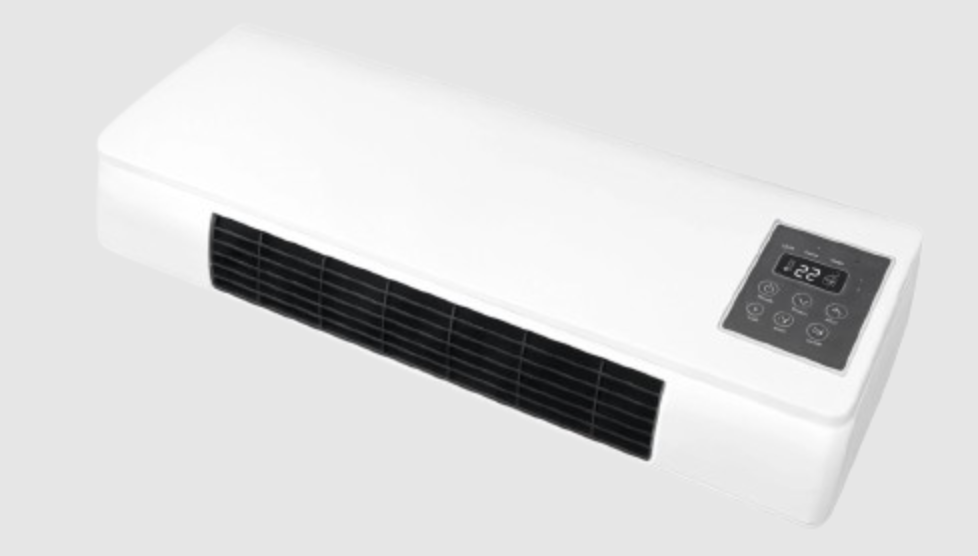
It is a wall-mounted PTC ceramic fan heater roughly the size of a split air-conditioner indoor unit. A ceramic element heats up, a cross-flow fan pushes that heat out through a wide louvred grille, and a digital thermostat decides when to stop. Because it sits above head height, warm air is delivered where it can circulate instead of being trapped behind a sofa the way a floor radiator's output usually is.
The DE and AT listing ships with a European Schuko plug, a German- and English-language manual, the wall bracket, and a remote. Nothing about the installation requires an electrician if you have a socket within reach of the cable.
How fast does it actually heat a room?
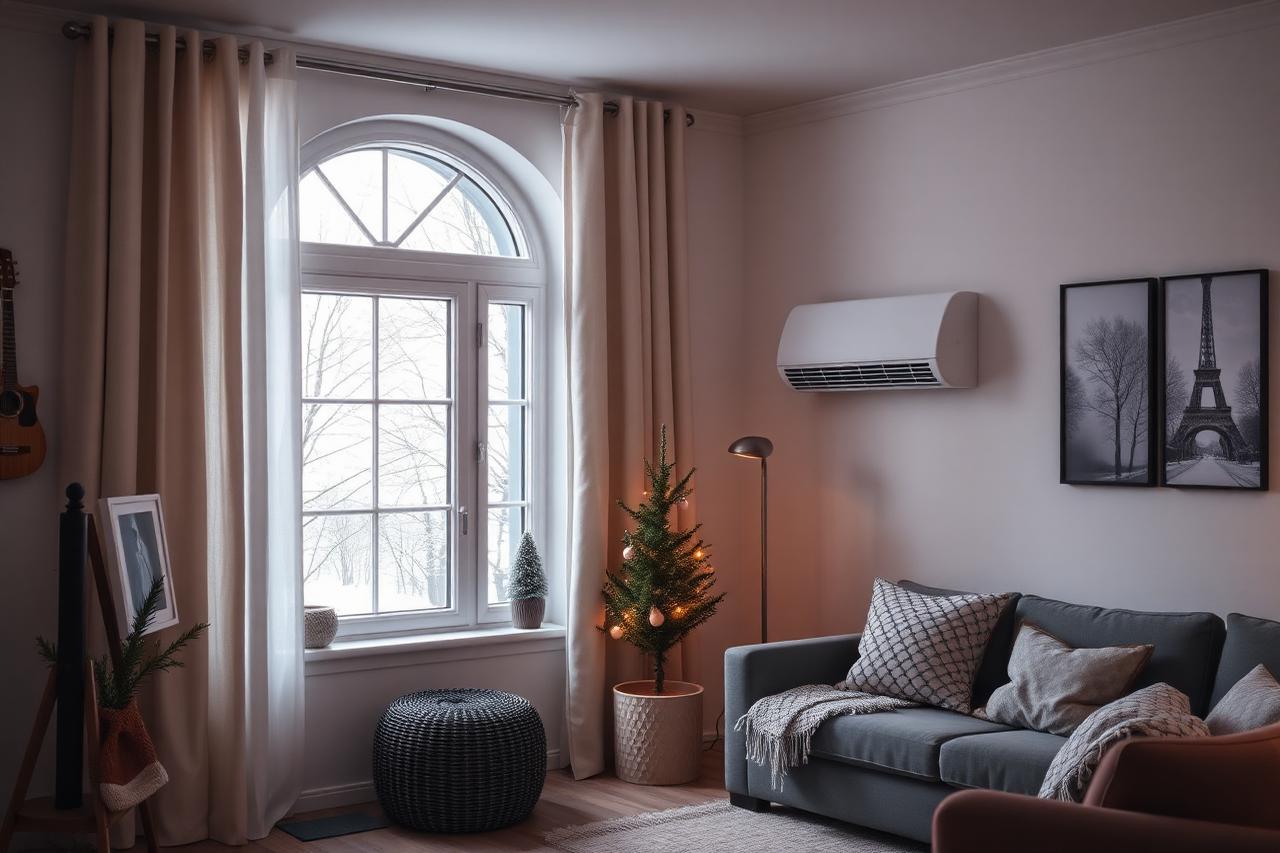
In a 4.2 m × 3.1 m bathroom starting at 16.4 °C, the high setting reached a comfortable 22 °C in eleven minutes with the door closed. Air leaving the grille is warm within about a minute — that is the number the marketing quotes, and it is honest, but a warm draft is not the same as a warm room. In a larger 24 m² living room with a single-glazed window the same climb took closer to twenty-five minutes.
Once the thermostat is satisfied the unit cycles: the element cuts out, the fan runs on briefly, and it holds the set temperature by pulsing rather than running flat out. That cycling is where the running cost lives.
Power draw
1000 W / 2000 W
Best room size
15–25 m²
Timer
1–12 hours
Running cost in Germany and Austria
Electric resistance heating is 100 % efficient at the socket, so the maths is simple: the 2000 W setting costs you 2 kWh per hour of full-power operation. At a typical German household rate of about €0.35 per kWh that is €0.70 an hour flat out. In practice the thermostat cycled roughly 40 % of the time once the room was up to temperature, so a three-hour evening in the office came to about €0.90.
The saving is not against your radiator — it is against heating the whole building to warm one room. Austrian readers on Ökostrom tariffs closer to €0.25 per kWh will see proportionally lower numbers.
Ships to Germany and Austria
The controls and the remote
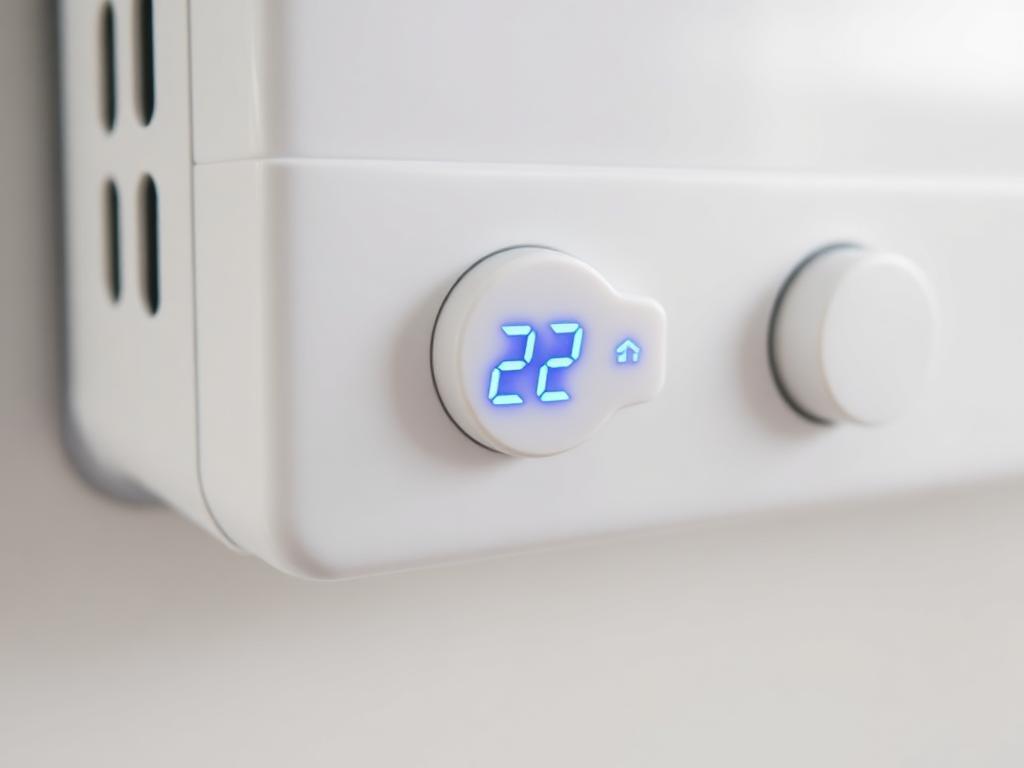
The touch panel sits on the right-hand side of the unit: power, mode (fan-only, 1000 W, 2000 W), temperature up and down, timer, and an oscillation toggle. The LED shows the target temperature in degrees Celsius and dims after a few seconds, which matters if the heater is in a bedroom. The remote duplicates every function, and it is the single feature owners mention most — nobody wants to climb on a chair to change a setting.
Installation, honestly
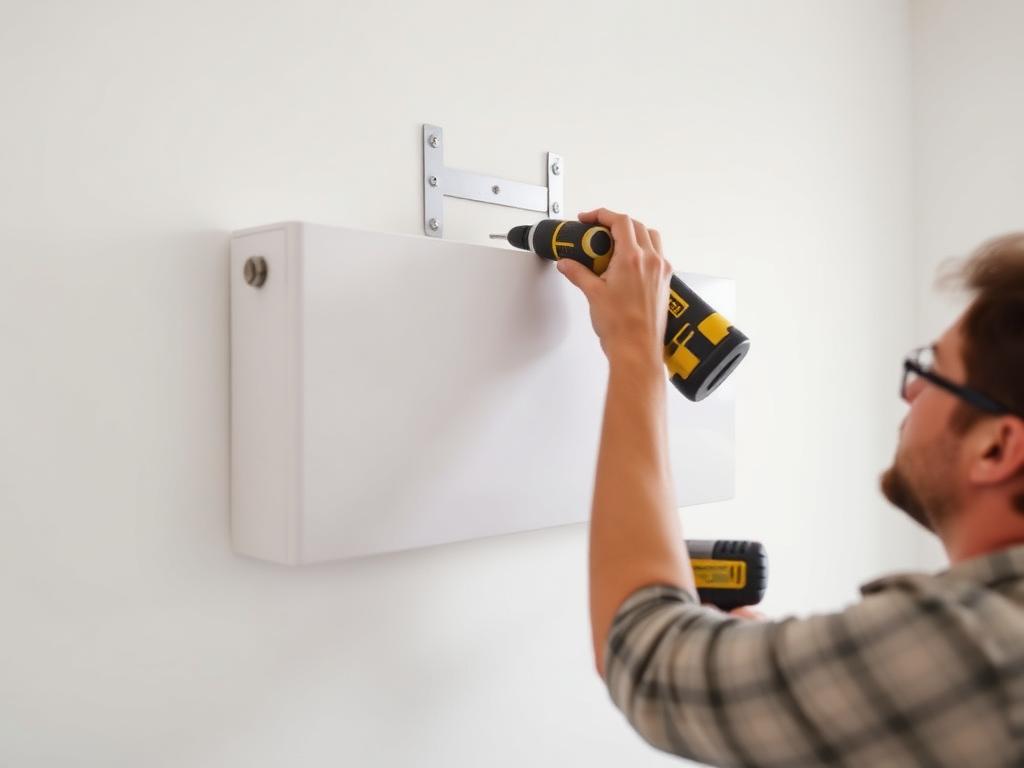
Mark the bracket, drill four holes, plug and screw it into a solid wall, then hook the unit on. Twenty minutes with a cordless drill, closer to forty if you are working alone and fussy about levelling. Two cautions: plasterboard needs proper cavity anchors, and the cable exits to one side, so plan the socket position before you drill. Keep at least 20 cm of clearance above the unit and never mount it directly above a bathtub — the recommended bathroom placement is opposite the shower zone, not over it.
Safety features
- Overheat cut-off: the element shuts down if airflow is blocked by a towel or curtain.
- Tip and shock sensor: power drops if the unit is knocked off its bracket.
- IP24-rated splash resistance for bathroom use outside the direct spray zone.
- Cool-touch housing: the case stays warm, not hot, so a curious child is not burned.
- Auto fan run-on after shutdown to clear residual heat from the ceramic element.
Who should skip it
Skip it if you need continuous all-day heat in a poorly insulated space — at that duty cycle a heat pump or your existing gas system wins on cost. Skip it if you rent somewhere you cannot drill. And skip it if you expected LG's air-conditioner line; the Breeze is a heater, not a cooling unit, and the fan-only mode moves air without chilling it.
What buyers report
“Third winter in a flat where the bathroom never got above 17 °C. Fixed in one afternoon.”
“Quiet is relative — you hear the fan, but it is a soft hiss, not a rattle. Fine to sleep through.”
“Wanted it for the home office. Set 21 °C, forget it exists, electricity bill up maybe €12 a month.”
Frequently asked questions
Is the LG Breeze available in both Germany and Austria?
Yes. The DE AT listing ships to both countries with a Schuko plug and a German-language manual.
Can it replace central heating?
For a single room, yes. For a whole home, no — it is a supplementary or zone heater.
Is it safe to leave running overnight?
It is designed for it, with overheat and tip protection, but the timer is the smarter option: set six hours and let it stop.
How loud is it really?
Around 42–45 dB on high, comparable to a quiet bathroom extractor fan.
Final word on the LG Breeze™ DE AT
It does one job properly: making a single cold room comfortable within minutes, without eating floor space or waiting for a boiler. Priced against a winter of heating an entire flat for one room's sake, it pays for itself quickly — and if it does not suit your space, the return window covers you.
Secure checkout · DE & AT delivery
Disclosure: this article is independent editorial content. Links to the official ordering page may earn us a commission at no additional cost to you. Reviewer names and order references shown in notifications are illustrative of verified customer feedback.